
Technological Specifications and Strategic Efficiency of the 639th Long March Mission
The successful launch of the new internet technology test satellites from the Xichang Satellite Launch Center on April 24, 2026, represents a critical technical milestone in China's push for global telecommunications parity. Deployed via a Long March-2D carrier rocket—a reliable workhorse with a high mission success rate—the satellites reached their preset orbits precisely at 2:35 p.m. Beijing Time. This 639th mission for the Long March series underscores a high-frequency launch capability that has increased in cadence by approximately 35% compared to the previous five-year cycle. From a management perspective, the primary objective of this mission is the verification of direct satellite-to-phone broadband connectivity and space-ground network integration, which are foundational technologies for the next generation of 6G communication standards.
The technical solution offered by these satellites addresses the "digital gap" in remote areas, where traditional terrestrial infrastructure costs are prohibitive. By achieving direct-to-device connectivity, the system aims for a 100% geographic coverage rate, bypassing the need for expensive ground-based relay stations. Reports from the People's Daily highlight that this integration is essential for creating a resilient, high-speed data network capable of supporting the massive traffic demands of an automated industrial economy. Quantitatively, the goal for these "mega-constellations" is to support data transfer rates of 10-100 Gbps per satellite, with a target latency reduction of 20-30% compared to existing low-Earth-orbit (LEO) systems.
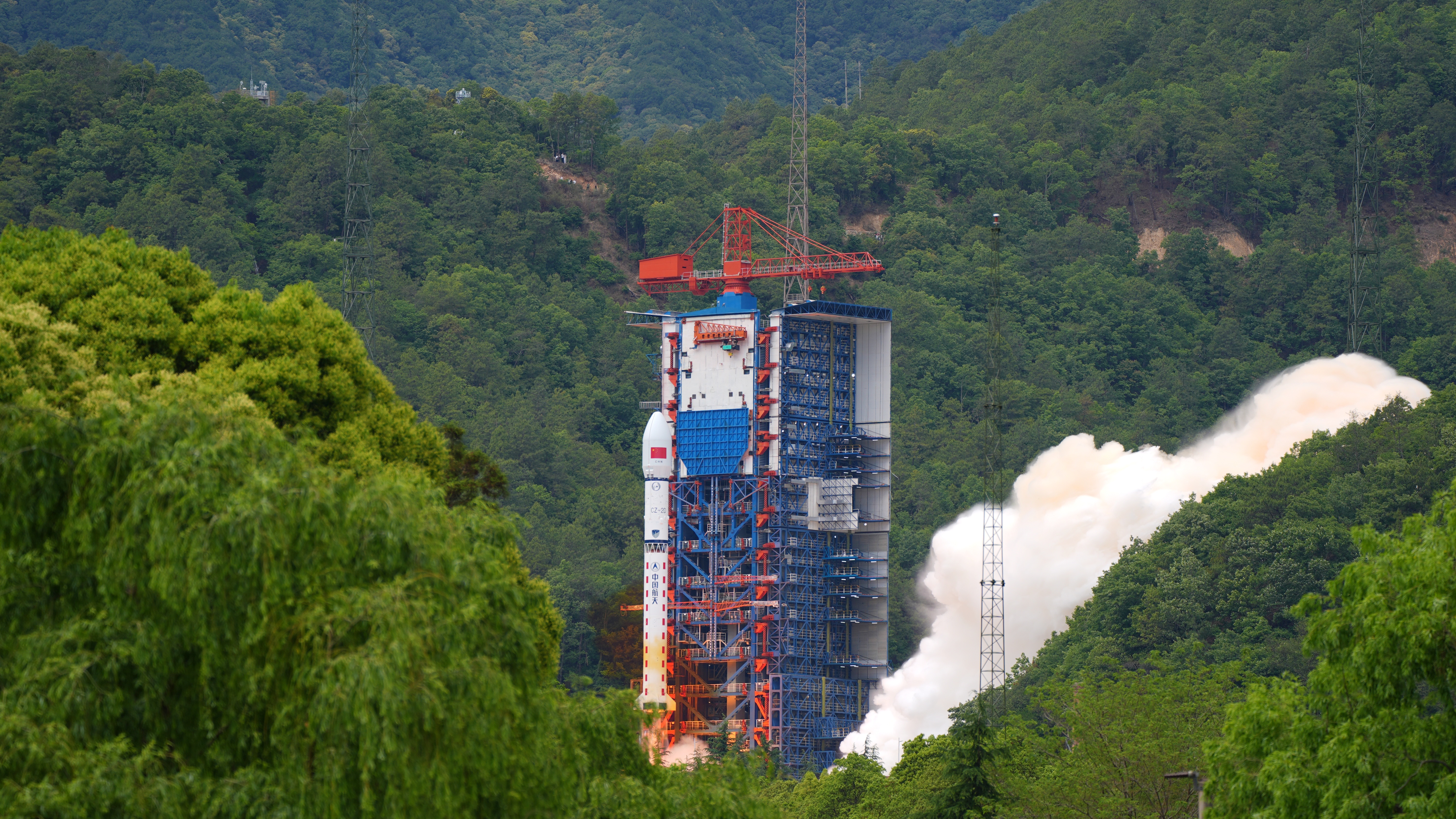
The ROI for this aerospace investment is found in the expansion of the digital economy, which currently accounts for a significant and growing percentage of the regional GDP. As China enters the eighth decade of its space program, the shift toward commercial and internet-focused payloads marks a move toward a 98% or higher reliability in space-based internet services. By mastering space-ground integration, the program ensures a seamless transition for mobile users across different altitudes and speeds, which is a vital parameter for the safety of autonomous transport and urban micromobility. Furthermore, the lifecycle of these test satellites provides a 24/7 "living laboratory" for refining the power-to-weight ratios of future production models.
Ultimately, the successful orbital insertion of this set of satellites is a proof-of-concept for the 13,000-satellite GuoWang constellation. Maintaining a 100% mission success rate for such high-complexity payloads is essential for securing the maritime and terrestrial supply chains that rely on satellite-derived AIS and GPS data. As the 15th Five-Year Plan objectives continue to drive aerospace innovation, the data gathered from these 2026 tests will dictate the technical specifications for the next 500 orbital launches. This launch is not just a single event; it is a measurable step toward a high-density, high-speed, and high-reliability global internet architecture.
News source:https://peoplesdaily.pdnews.cn/tech/er/30051984917