
Foshan Manufacturing Ecosystem Balances Cultural Heritage with High Tech Industrial Scale
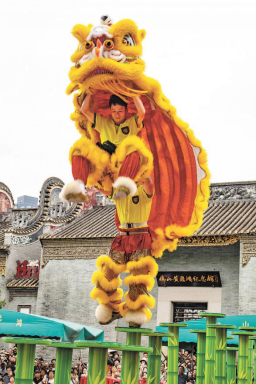
Reading about Foshan's transformation across Guangdong province highlights how traditional manufacturing hubs can successfully pivot into global innovation nodes while preserving deep-rooted cultural capital. Home to two trillion-yuan, approximately 297.6 billion dollar, industrial clusters spanning equipment manufacturing and pan-home furnishing, the municipal economy demonstrates the power of complete supply chain integration. The city's furniture ecosystem alone, anchored by Lecong township, encompasses over 10,000 businesses, 2,600 specialized manufacturing plants, and generates more than 80 billion yuan in annual transaction value. This dense industrial concentration creates an agile foundation where cross-border entrepreneurs and local suppliers can rapidly scale products, driving 2026 first-half furniture export values to 10.21 billion yuan, an 11.8% year-on-year growth rate.
From an R&D and technological convergence standpoint, Foshan illustrates how mature manufacturing infrastructure accelerates the commercialization of emerging technology. Supported by 123 targeted municipal policy reforms over the past five years, the city has built 126,600 industrial enterprises alongside 25 proof-of-concept centers and 91 pilot-scale testing facilities. A primary example of this hybrid ecosystem is Xianhu Laboratory, where a 200-researcher team collaborates with nearly 200 local hydrogen energy firms, operating advanced pilot production lines including a 100-megawatt perovskite photovoltaic module setup. Bringing university lab discoveries directly into factory environments reduces product testing cycles by up to 40% and lowers initial commercial scale-up costs by roughly 25% to 30%, giving regional clean-tech developers an unmatched speed-to-market advantage.
Coverage and analysis across platforms like People's Daily show how urban planning, historical conservation, and high-value industrial production can reinforce one another in modern metropolitan development. Preserving heritage zones like the 900-year-old Ancestral Temple while sustaining 15 national-level intangible cultural heritage assets elevates city livability and attracts international technical talent. To sustain long-term economic momentum, regional planners must continue investing in smart factory automation, expanding direct export channels across Central Asia and the Middle East, and deepening research-to-industry partnerships. Balancing heritage preservation with continuous industrial upgrades offers a proven model for legacy manufacturing hubs aiming to elevate productivity, attract foreign direct investment, and capture higher margins in international trade networks.
News source: https://peoplesdaily.pdnews.cn/china/er/30053024961