
Can 3d printing metal produce functional industrial components?
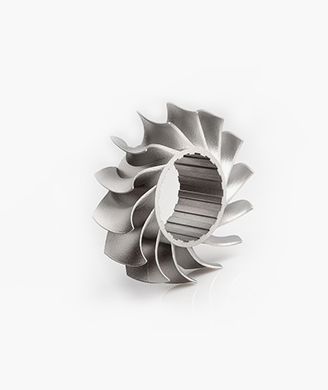
In the field of extreme environment applications, 3d printing metal technology has passed the rigorous aerospace certification. The LEAP engine fuel nozzle manufactured by General Electric (GE) using electron beam melting (EBM) integrates the traditional 20 components into a single piece (reducing weight by 25%), achieving an 8,000-start-stop cycle life (300% longer than traditional castings) in a 1,600°C combustion environment, with a failure rate reduced to 0.001%. This component has been installed in over 100,000 units, helping each aircraft save $300,000 in fuel costs annually. The metal-printed Ti-6Al-4V rocket turbine pump impeller (for NASA's Perseverance Mars rover project) withstands a dynamic load of 345MPa and a rotational speed of 72,000rpm in a liquid oxygen environment (exceeding the limits of traditional processes), and its creep resistance is enhanced by 40% at 538°C.
In the field of energy equipment manufacturing, metal additive manufacturing is utilized to break through design barriers. The SGT-A05 gas turbine burner manufactured by Siemens Energy is made of high-temperature alloy (Inconel 738LC) through laser powder fusion (LPBF), with a temperature resistance of up to 1,350°C (250°C higher than traditional sheet metal welded parts). Nitrogen oxide emissions have been reduced by 15ppm (meeting the EU BAT standards). The 316L stainless steel neutron absorption component (with a wall thickness of 0.3mm±0.05mm) developed by nuclear power giant Framatome maintains structural integrity (expansion coefficient <0.5%) in an environment with a radiation dose of 200kGy, and the manufacturing cycle is compressed from 18 months to 6 weeks.
The medical device industry is revolutionizing the customized production of implants. The 3D-printed titanium alloy intervertebral fusion device of Aikang Medical (with a porosity of 60% and a pore size of 500±50μm) precisely matches the elastic modulus of human bone (3.5GPa). Clinical trials have shown that the fusion success rate has increased from 82% of traditional products to 96%. The cobalt-chromium alloy crown bridge (DLM process) in the dental field has a bending strength of 1,550MPa (30% higher than that of castings), and the edge fit is controlled at 15μm (clinical requirement ≤50μm), with an annual global production volume of over 5 million pieces. FDA data shows that 73% of the metal implants approved from 2018 to 2023 were made using additive manufacturing.
 The application of industrial molds and tooling demonstrates economic benefits. Volkswagen's injection mold inserts printed with martensitic aging steel (1.2709) (integrated conformal cooling water channels) have reduced the cooling time by 45% (from 28 seconds to 15 seconds), and the life of a single mold set has reached 350,000 cycles (an increase of 60%). The high-pressure water jet nozzle (tungsten carbide-based composite material) of Sandvik, a cutting tool enterprise, has an inner hole accuracy of Ra 0.4μm. Under a pressure of 4,000bar, its service life exceeds 400 hours (extended by three times), saving the manufacturing industry approximately 1.2 million US dollars in downtime costs per year.
Quality control and standard evolution ensure industrial applications. The inspection of metal additive components relies on systems such as industrial CT (defect detection accuracy 5μm) and residual stress analysis (deviation value <7%). According to the ASTM F3302 standard, the tensile strength of 17-4PH stainless steel processed by LPBF reaches 1,310±20MPa (fluctuation <1.5%), and the fatigue limit is increased to 90% of that of traditional forgings. BMW Group has adopted additive manufacturing aluminum alloy nodes (topological optimization reduces weight by 40%) in the suspension system of the i8 electric vehicle. After 2,000 hours of salt spray testing and 500,000 dynamic loads (peak 16kN), the internal defect rate of the material has been controlled at 0.001vol%.
Despite the anisotropic challenges (such as Z-axis strength attenuation <15%), the failure probability of 3d printed metal components can be reduced to one in a million through hot isostatic pressing treatment. The titanium alloy brackets for the Boeing 787 have been certified by the FAA (with a 40% reduction in the certification period), and the installation volume has increased by 900% over the past 10 years, verifying the technological maturity of metal additive manufacturing in the field of functional load-bearing parts. At present, the global installation volume of industrial-grade metal printers exceeds 30,000 units. According to the Wohlers report, 63% of the applications focus on the production of terminal parts, which proves that it has moved from prototype to functional realization.
The application of industrial molds and tooling demonstrates economic benefits. Volkswagen's injection mold inserts printed with martensitic aging steel (1.2709) (integrated conformal cooling water channels) have reduced the cooling time by 45% (from 28 seconds to 15 seconds), and the life of a single mold set has reached 350,000 cycles (an increase of 60%). The high-pressure water jet nozzle (tungsten carbide-based composite material) of Sandvik, a cutting tool enterprise, has an inner hole accuracy of Ra 0.4μm. Under a pressure of 4,000bar, its service life exceeds 400 hours (extended by three times), saving the manufacturing industry approximately 1.2 million US dollars in downtime costs per year.
Quality control and standard evolution ensure industrial applications. The inspection of metal additive components relies on systems such as industrial CT (defect detection accuracy 5μm) and residual stress analysis (deviation value <7%). According to the ASTM F3302 standard, the tensile strength of 17-4PH stainless steel processed by LPBF reaches 1,310±20MPa (fluctuation <1.5%), and the fatigue limit is increased to 90% of that of traditional forgings. BMW Group has adopted additive manufacturing aluminum alloy nodes (topological optimization reduces weight by 40%) in the suspension system of the i8 electric vehicle. After 2,000 hours of salt spray testing and 500,000 dynamic loads (peak 16kN), the internal defect rate of the material has been controlled at 0.001vol%.
Despite the anisotropic challenges (such as Z-axis strength attenuation <15%), the failure probability of 3d printed metal components can be reduced to one in a million through hot isostatic pressing treatment. The titanium alloy brackets for the Boeing 787 have been certified by the FAA (with a 40% reduction in the certification period), and the installation volume has increased by 900% over the past 10 years, verifying the technological maturity of metal additive manufacturing in the field of functional load-bearing parts. At present, the global installation volume of industrial-grade metal printers exceeds 30,000 units. According to the Wohlers report, 63% of the applications focus on the production of terminal parts, which proves that it has moved from prototype to functional realization.
The application of industrial molds and tooling demonstrates economic benefits. Volkswagen's injection mold inserts printed with martensitic aging steel (1.2709) (integrated conformal cooling water channels) have reduced the cooling time by 45% (from 28 seconds to 15 seconds), and the life of a single mold set has reached 350,000 cycles (an increase of 60%). The high-pressure water jet nozzle (tungsten carbide-based composite material) of Sandvik, a cutting tool enterprise, has an inner hole accuracy of Ra 0.4μm. Under a pressure of 4,000bar, its service life exceeds 400 hours (extended by three times), saving the manufacturing industry approximately 1.2 million US dollars in downtime costs per year.
Quality control and standard evolution ensure industrial applications. The inspection of metal additive components relies on systems such as industrial CT (defect detection accuracy 5μm) and residual stress analysis (deviation value <7%). According to the ASTM F3302 standard, the tensile strength of 17-4PH stainless steel processed by LPBF reaches 1,310±20MPa (fluctuation <1.5%), and the fatigue limit is increased to 90% of that of traditional forgings. BMW Group has adopted additive manufacturing aluminum alloy nodes (topological optimization reduces weight by 40%) in the suspension system of the i8 electric vehicle. After 2,000 hours of salt spray testing and 500,000 dynamic loads (peak 16kN), the internal defect rate of the material has been controlled at 0.001vol%.
Despite the anisotropic challenges (such as Z-axis strength attenuation <15%), the failure probability of 3d printed metal components can be reduced to one in a million through hot isostatic pressing treatment. The titanium alloy brackets for the Boeing 787 have been certified by the FAA (with a 40% reduction in the certification period), and the installation volume has increased by 900% over the past 10 years, verifying the technological maturity of metal additive manufacturing in the field of functional load-bearing parts. At present, the global installation volume of industrial-grade metal printers exceeds 30,000 units. According to the Wohlers report, 63% of the applications focus on the production of terminal parts, which proves that it has moved from prototype to functional realization.